
Categories
POS systems, explained
A POS system is bought on its back office, not its touchscreen: the VAT rate per article, the daily close by rate and payment method, and the export your accountant needs.
On this page
What a POS system actually is
A POS system is the software that records a sale at the moment it happens, takes the payment, prints or sends the receipt, moves the stock and writes the result into something your accountant can use. The till app is the visible part. The part you are actually buying is the back office: the article list with a VAT rate on each line, the daily close that splits turnover by rate and payment method, the record that cannot be altered without a trace, and the export your fiduciaire or tax administration asks for. Choose on the back office and the till will be fine. Choose on the touchscreen and you will discover in month four that the VAT split is wrong.
The four kinds of POS system, and who each one fits
Almost everything sold in Europe falls into one of four shapes, and the shape decides more than the feature list.
Payment-first tills. A card reader with a free app attached: SumUp, Zettle by PayPal, Square. You pay nothing monthly and everything per transaction. Right for a market stall, a food truck, anyone whose menu is a chalkboard. Wrong as soon as you need a floor plan, a kitchen screen or a serious stock file.
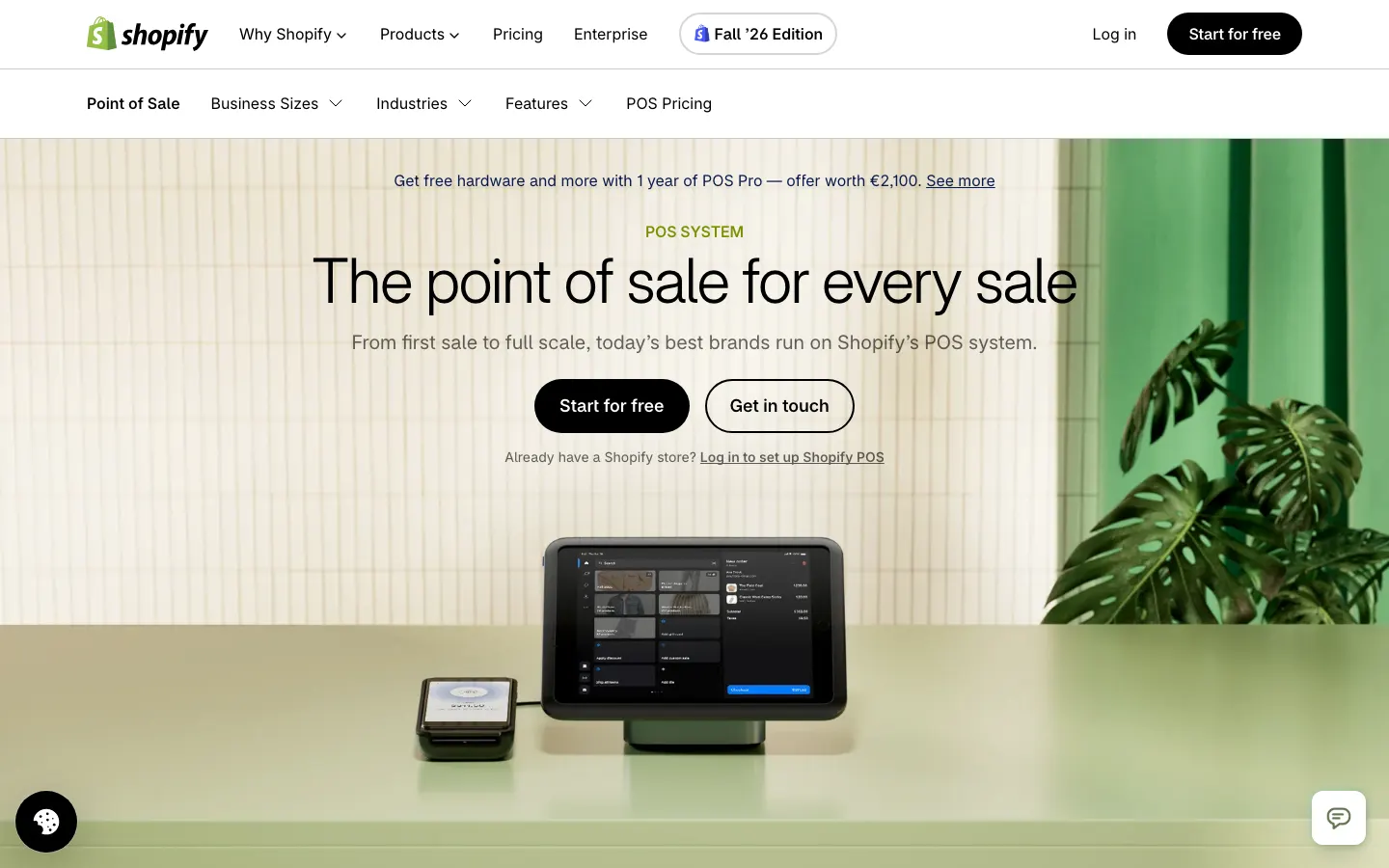
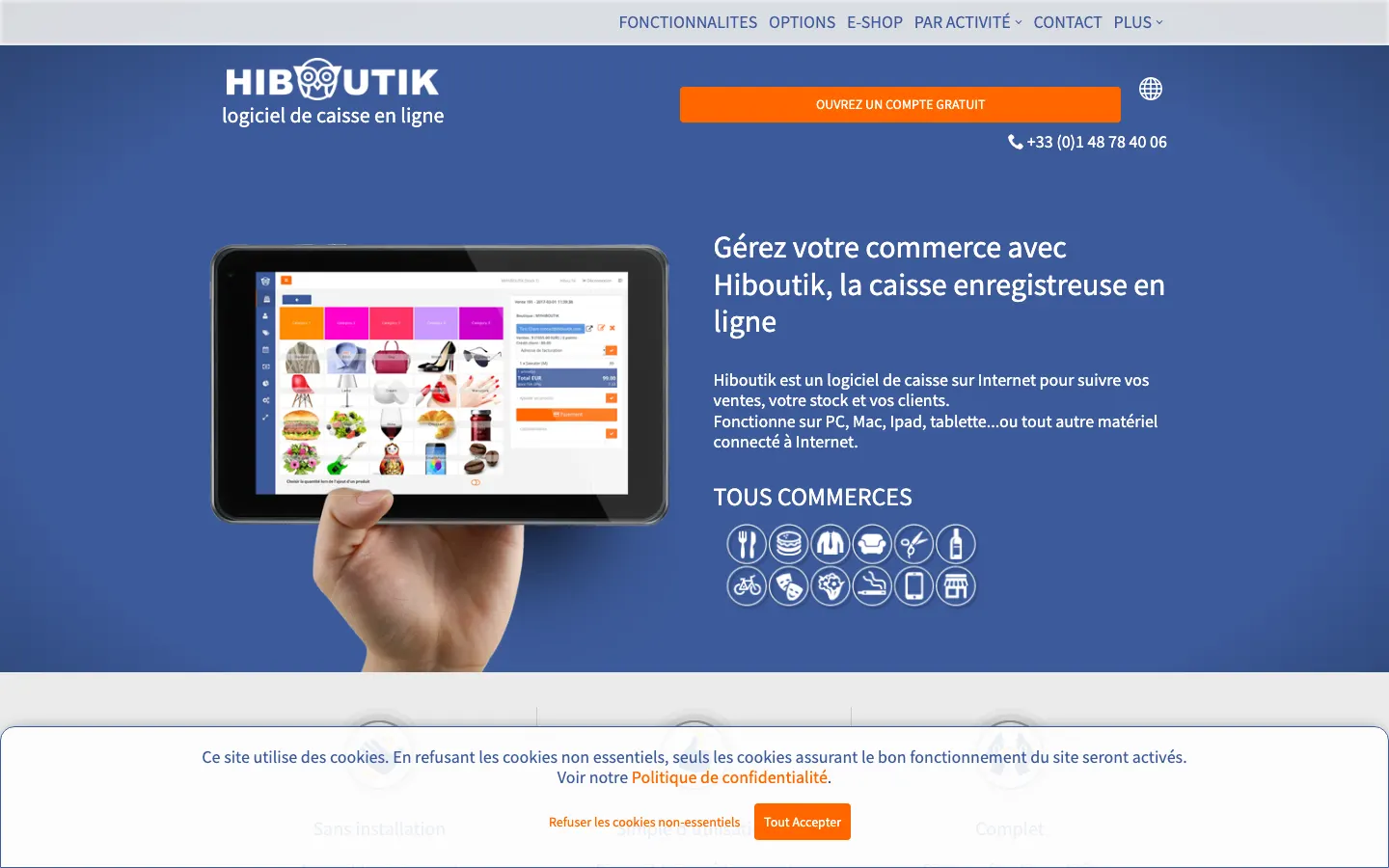
Retail systems built around a catalogue. Shopify POS and Hiboutik are the clearest examples. One product list, one stock level, one customer record, shared between the shop floor and the web shop. Right for retail that already sells online, or wants to. Wrong for a restaurant, because there is no table, no course, no split bill.
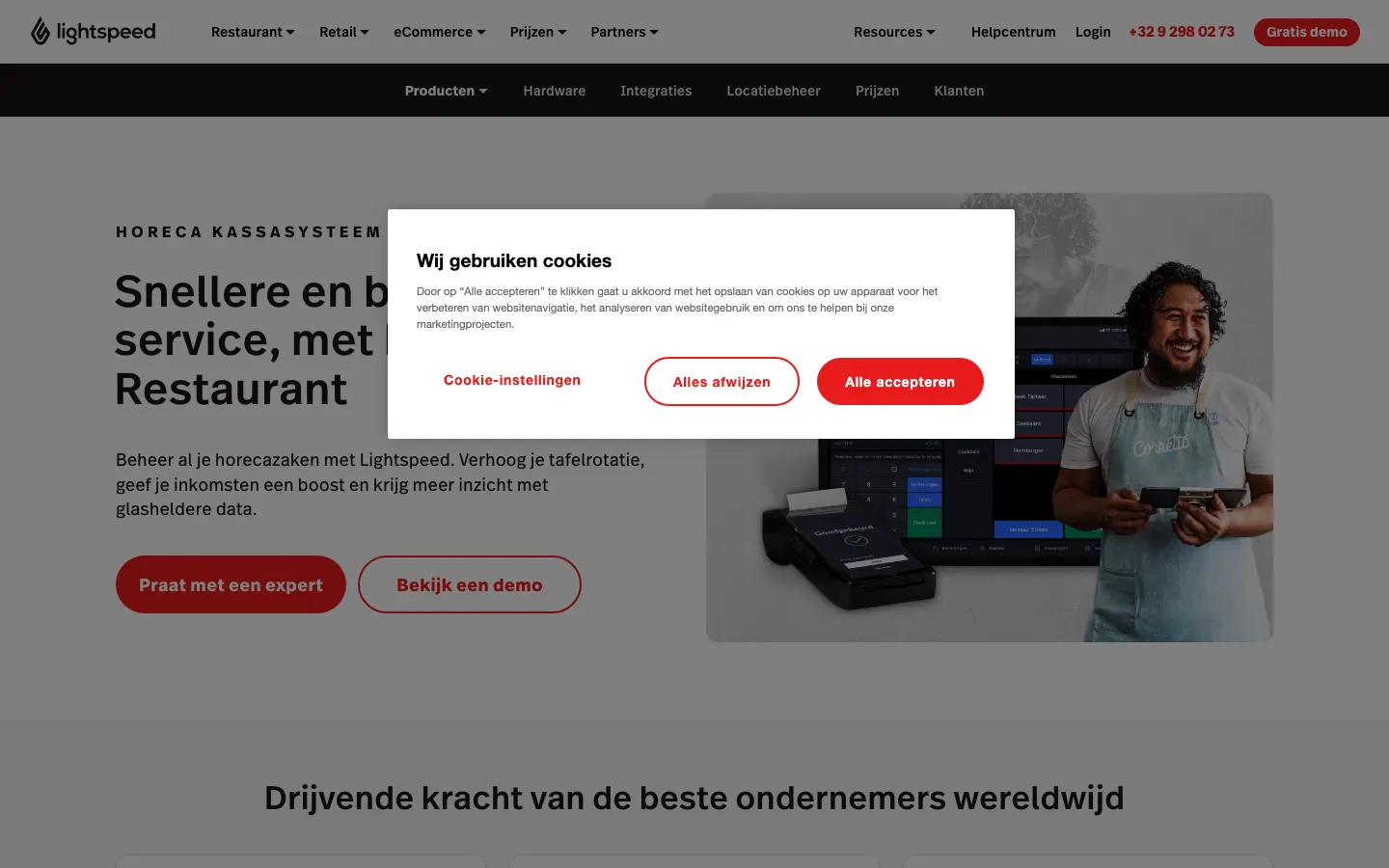
Hospitality systems. Lightspeed Restaurant, L'Addition, Zelty, unTill, Trivec, orderbird. Table plans, courses, kitchen printers and screens, handhelds, delivery platform links, tips. This is the expensive end and it is worth the money in a real dining room.
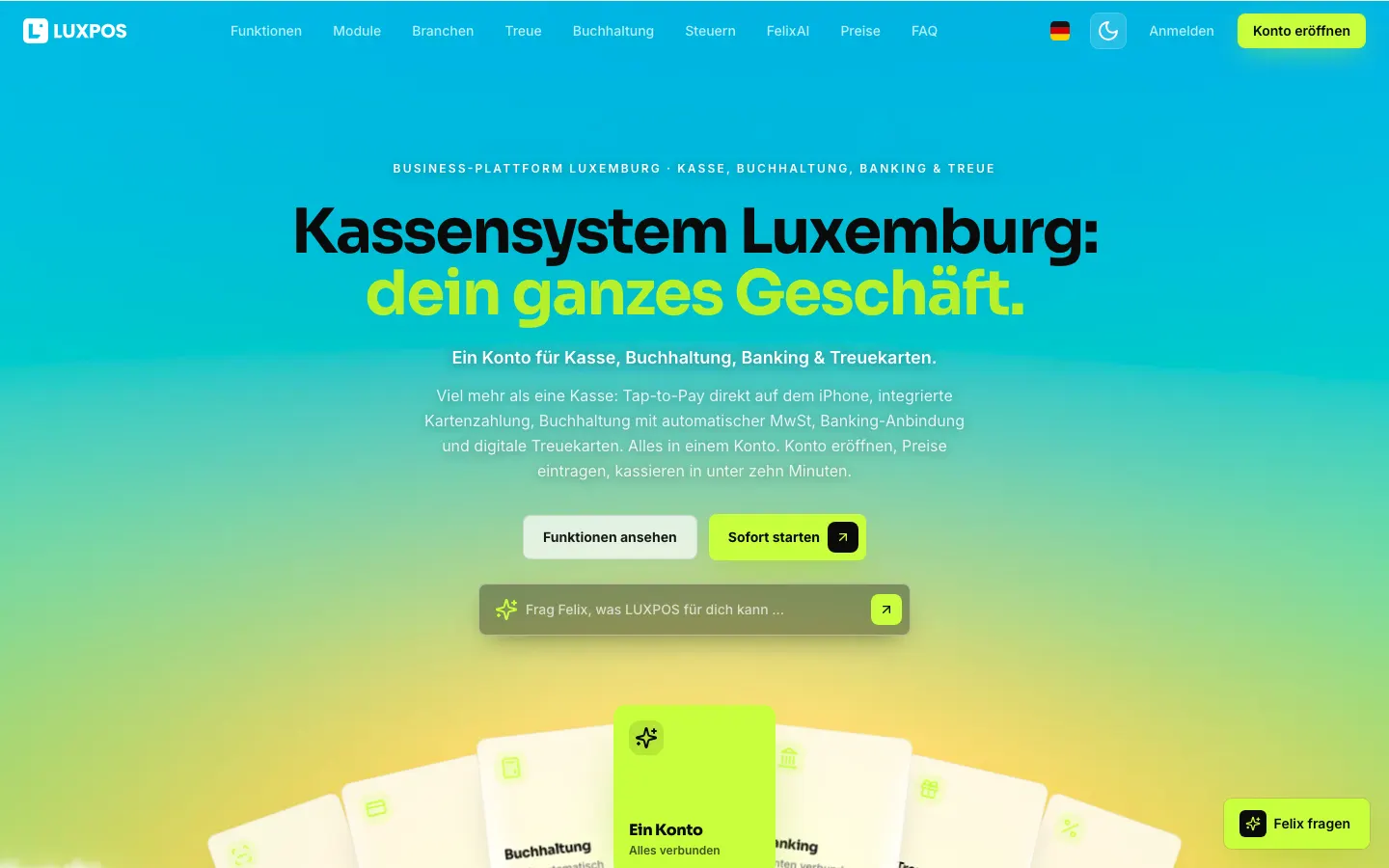
Compliance-first tills sold with the back office. Smaller national vendors that bundle the till with bookkeeping, VAT filing and the local audit file. LUXPOS, built by the same company that publishes this site, is one of them. Right when your pain is the paperwork rather than the service flow. Wrong if you need the deepest restaurant feature set, because no small vendor matches Lightspeed there.
What actually matters when you choose a POS system
Seven criteria, in the order that decides real purchases.
- Is it sold in your country? Take this from the vendor's own availability page, not a reseller. Square, orderbird and Zettle are all good products that a Luxembourg merchant cannot sign up for.
- Can the VAT rate live on the article, and does the daily close split by rate? In Luxembourg a restaurant service is 3 percent, still wine up to 13 degrees is 14 percent and beer or spirits are 17 percent, all on one bill. A till that stores one rate per sale gets this wrong by design.
- What survives a network outage? Ask for it in writing, per function. Lightspeed documents exactly which functions keep working and that integrated card payments stop. Hiboutik states it has no offline mode at all.
- What is the real card rate, and who sets it? The subscription is rarely the biggest line. SumUp charges 2.75 percent in Luxembourg pay as you go, or 1.29 percent on standard cards with a 29 EUR monthly Paiements Plus subscription. Shopify publishes 1.4 percent in person on Basic down to 1.2 percent on Advanced.
- Which languages does the staff interface run in? Not the marketing site. The screen a part-time waiter uses, in French, German, English, Portuguese or Italian, depending on who stands in your kitchen.
- What comes out for the accountant? A CSV of sales is not an accounting handover. Ask which exports exist by name.
- Contract term, hardware and exit. A twelve month term, proprietary hardware and a quote-only price are three separate forms of lock-in. Ask what your data looks like on the day you leave.
What does a POS system cost in 2026?
Published entry prices, net, for one till, read from each vendor's own pricing page on 11 November 2026.
| System | Published entry price |
|---|---|
| Square, SumUp, Zettle, Hiboutik | 0 EUR a month, card fees or a paid upgrade |
| unTill Air Basic | 21,85 EUR a month |
| Shopify POS | 32 EUR a month, plus 79 EUR per POS Pro location |
| SumUp Caisse Plus | 49 EUR a month |
| LUXPOS Register | 59 EUR a month |
| Lightspeed Restaurant Basic | 89 EUR a month, 49 EUR per extra licence |
| orderbird PRO S | 99,90 EUR a month |
| L'Addition, Zelty, Trivec | price on request |
So the honest range is zero to about 100 EUR a month for one till at list price, with hospitality depth sitting between 89 and 249 EUR once you need more than one register. Card acceptance adds 1,2 to 2,75 percent of turnover depending on vendor, country and plan, and that percentage will usually dwarf the subscription. Three vendors publish no figure at all: budget for a sales call and a term commitment.
The mistakes buyers make
Buying on the demo. Every POS demo looks good, because the demo database has twelve products and no mistakes. Buying on the subscription and ignoring the card rate, which is where the money actually goes. Letting the cashier choose the VAT rate at the till instead of putting it on the article. Taking a certification claim at face value when the document behind it is a proof of commitment with no certificate number. And forgetting the second till: some vendors price per account with unlimited devices, others per register licence.
Europe and Luxembourg specifics
The legal regime changes at every border, and it is the single biggest reason a product recommendation does not travel.
- Luxembourg certifies nothing: no local NF525, no TSE, no approved list, so nobody can honestly sell you a till certified for Luxembourg. Circulaire L.G.-A n° 63 of 15 September 2017 requires traceability of deletions and changes, daily cash entries, payment methods in the daily totals and ten year retention, and the tax administration can demand your books as a FAIA 2.01 file under article 70(3) of the VAT law.
- France requires a certificate from an accredited body, NF525 or LNE, under article 286-I-3 bis of the CGI, with a 7 500 EUR penalty per non-compliant software.
- Germany requires a certified TSE under paragraph 146a AO and the KassenSichV, plus a receipt duty and notification of each system to the Finanzamt.
- Belgium requires a registered cash system with an FDM black box in hospitality above 25 000 EUR of on-premise meals, moving to GKS 2.0 for new businesses from 1 July 2026.
- Payment rails are local too. Bancontact in Belgium, meal vouchers such as Edenred and Pluxee in Luxembourg and Belgium. Ask which of these the terminal accepts before the contract, not after.
Questions to ask a POS vendor
- Can a cashier delete or change a line without leaving a trace, and can you show me that record?
- Show me a daily close that separates 3 percent food from 17 percent drinks, on screen.
- Which exports exist by name, and can you generate one from a demo database today?
- What exactly keeps working when the internet drops, function by function, in writing?
- What is my card rate in my country, including premium and commercial cards?
- Which languages does the staff screen run in, and which are fully translated?
Where to go next
The ranking, with the criteria written down first, is in the best POS systems for Luxembourg and, for the wider region, the best restaurant POS in the Benelux. The step-by-step version of the criteria above is how to choose a POS system for a restaurant. The legal question behind most sales pitches is answered in does Luxembourg require a certified cash register, and two head to heads show what the criteria do to real products: Lightspeed against orderbird and LUXPOS against Square. Prices and sources sit on the Lightspeed Restaurant and SumUp POS profiles. Vendors can correct us through get listed.
Disclosure: Thinking is published by TTA Technologies, which also builds LUXPOS. Prices above come from vendor pricing pages read on 11 November 2026.
Questions and answers
What is a POS system?
How much does a POS system cost per month?
Do I need a certified cash register in Luxembourg?
Which POS system is best for a restaurant?
Can a POS system still take payments when the internet is down?
Does my POS have to handle different VAT rates on one receipt?
What is the difference between a cash register and a POS system?
Can I keep my own card payment provider with a POS system?
Is a free POS system good enough?
Weekly, Thursday morning, Central European Time.
The Thinking briefing
One email a week: what changed in European business software, which prices moved, and which comparison we published. No sales mail.