

Categories
Salon and booking software, explained
Salon software earns its price in two places only, appointments booked after closing time and no-shows that are actually charged for, and the pricing unit matters more than the headline price.
On this page
What salon software actually does
Salon software owns the calendar and the client record, and everything else it sells follows from those two. It publishes a booking page clients can use at eleven at night, writes the appointment straight into the right person's column, sends the reminder, holds a deposit or a card against a no-show, rings the sale and the retail product at the till, and tells you which chair earned what. The money case is narrow and measurable: appointments booked outside opening hours, and no-shows that no longer cost you a full slot. Judge a product on those two and the rest of the feature list sorts itself out.
The four kinds of salon software, and who each one fits
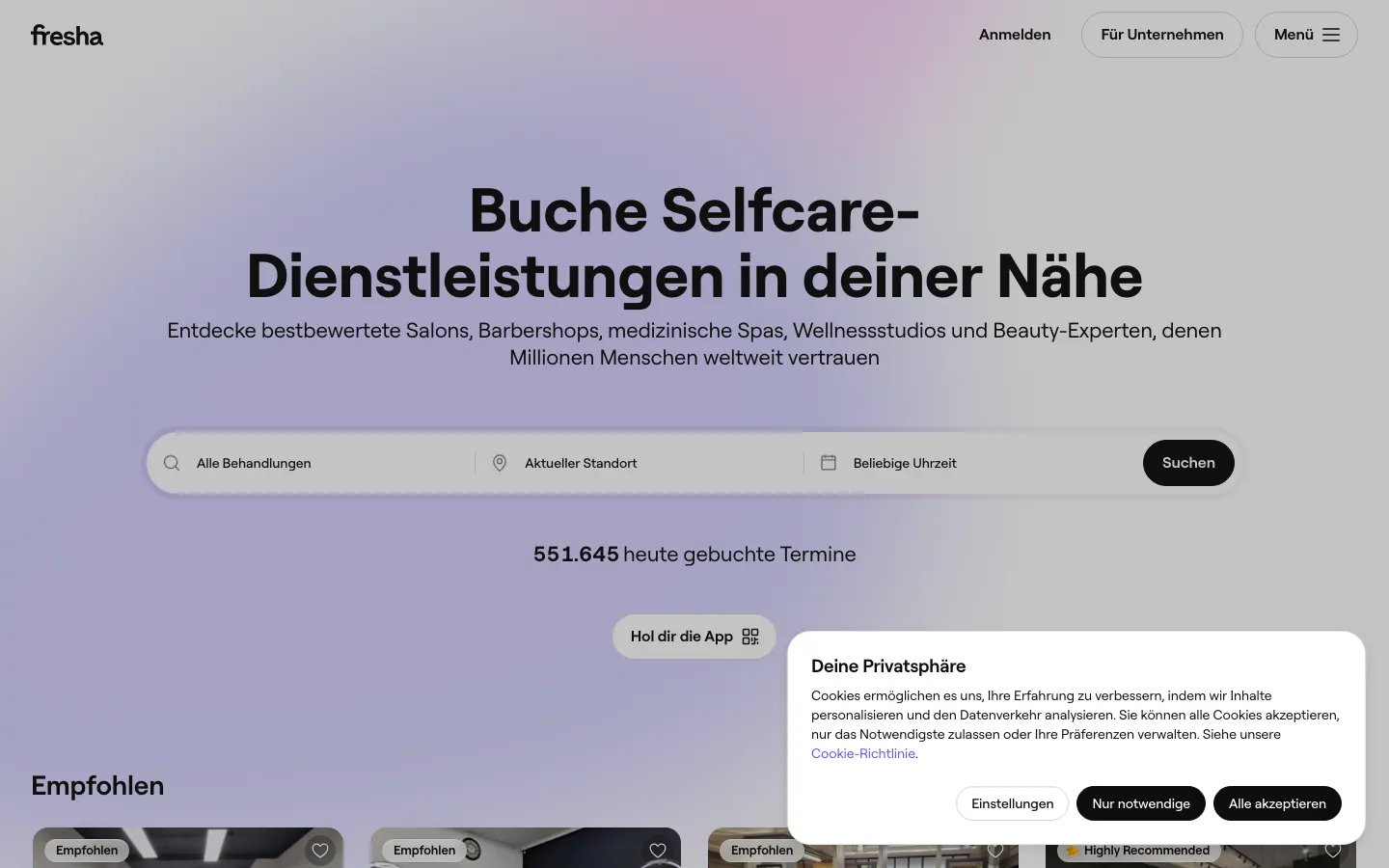
Marketplace platforms. Fresha, Treatwell, Planity, Booksy. They run a consumer app that sends you clients, and they charge for that traffic rather than only for the software. Right if you have empty chairs and want demand. The price of demand is in the terms: Treatwell takes 35 percent of a new marketplace client's first booking in Belgium, Fresha currently charges nothing for new euro-area marketplace clients, Booksy folds everything into one flat fee.
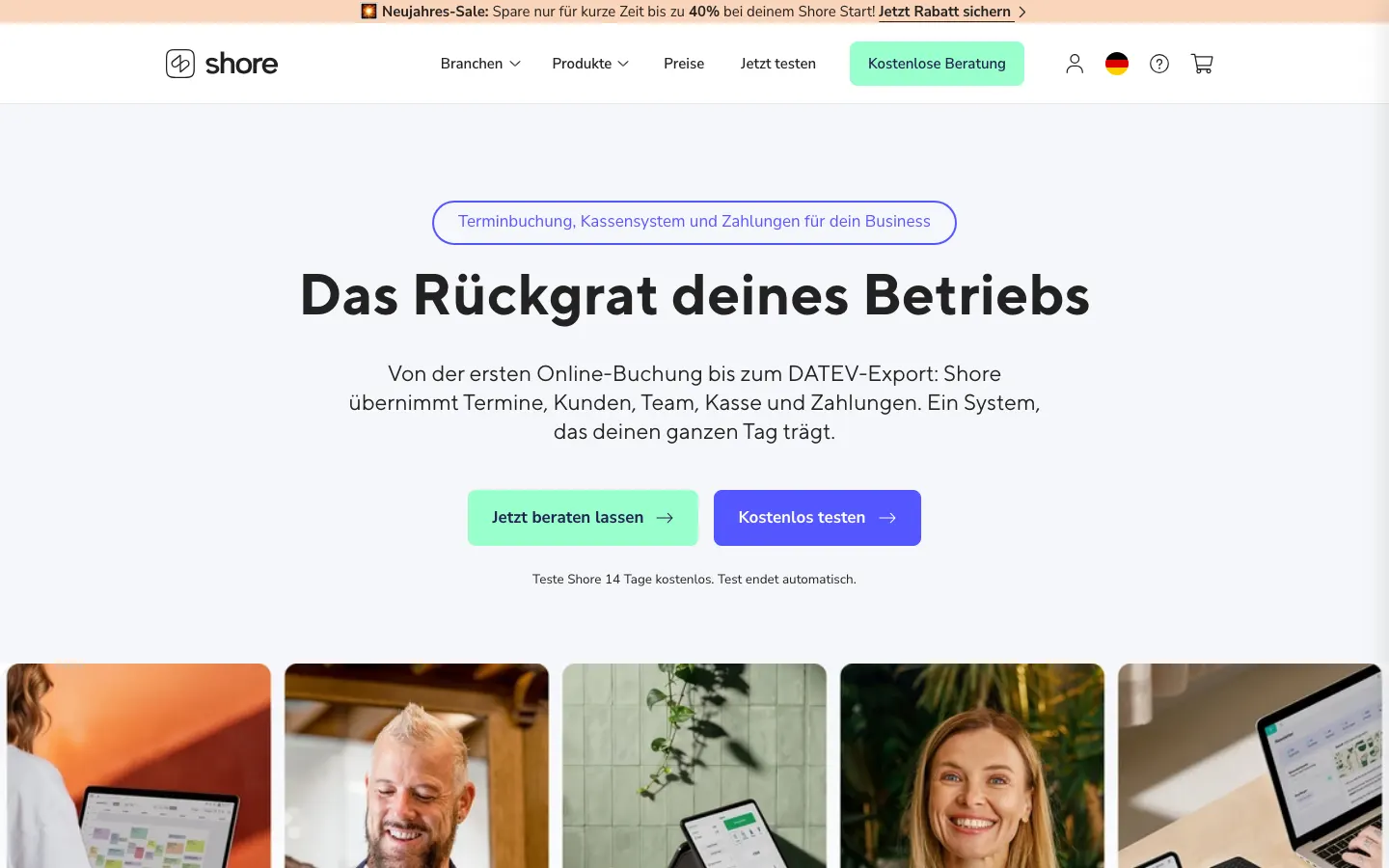
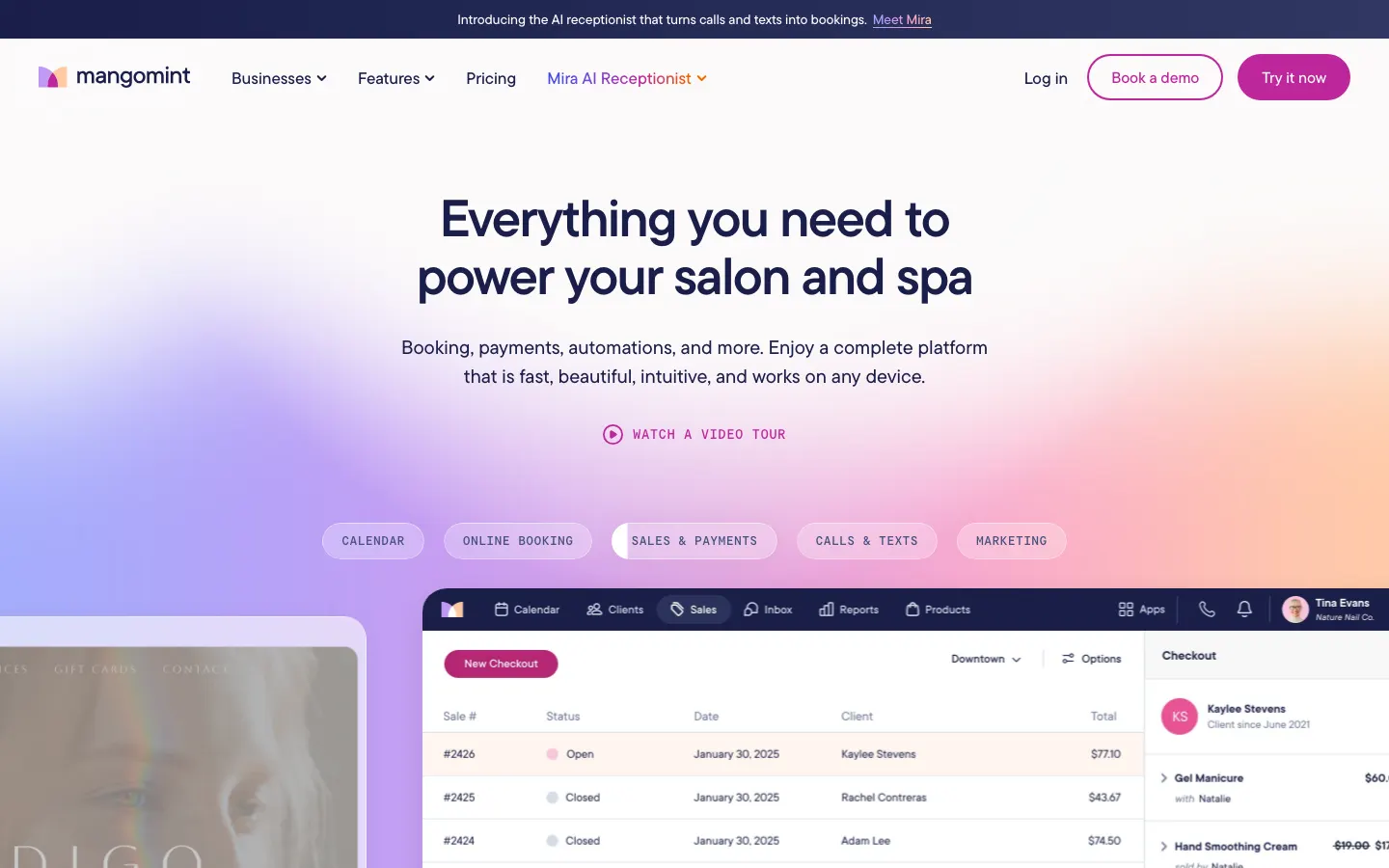
Subscription software without a marketplace. Salonkee, Shore, Phorest, Mangomint, Shortcuts. You bring the demand, they run the operation: calendar, client history, stock, staff targets, reporting. Right for a salon that is already full and wants the back office to stop leaking. Wrong if your real problem is that nobody knows you exist.
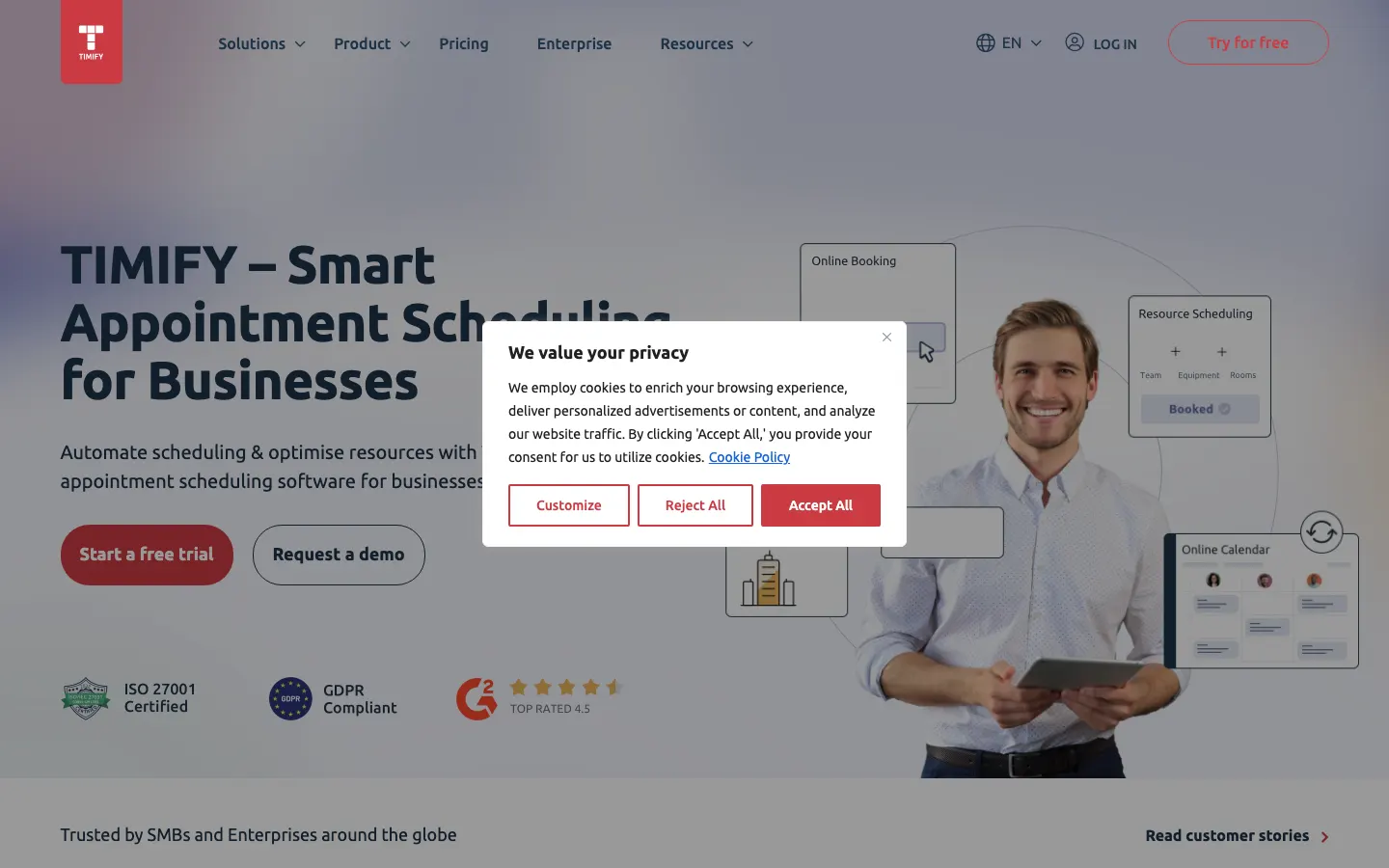
Plain schedulers. TIMIFY is the clearest example: a booking widget and a resource calendar, cheap, with a free tier for a single resource. Right for a solo practitioner, a studio renting rooms, a clinic that only needs slots. Wrong the moment you need a deposit enforced or a till.
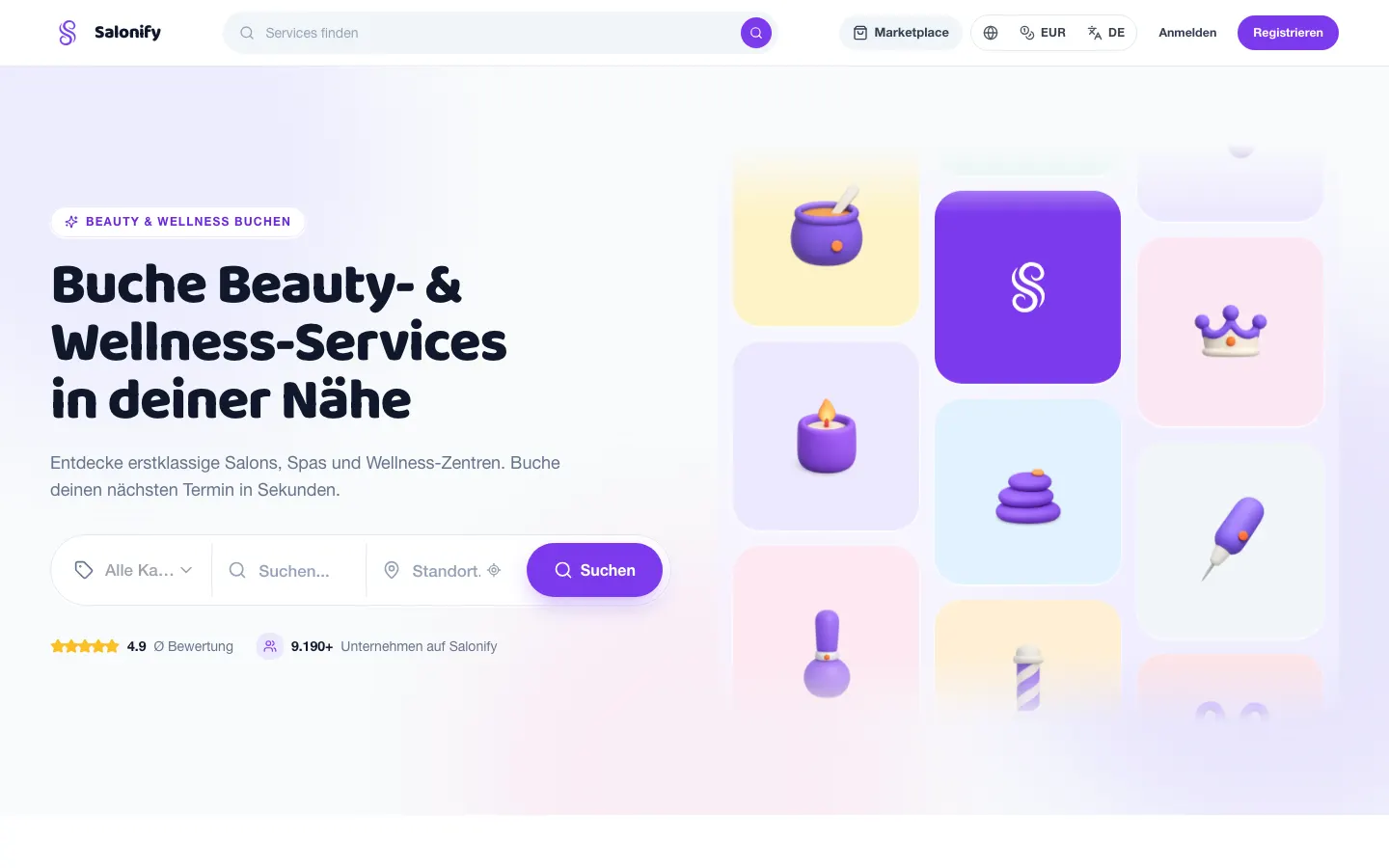
All-in-one with till and payments. Salonify, built by the company that publishes this site, and Salonkee once you add its payments module. Booking, till, card terminal and the local VAT split in one subscription. Right when the salon also sells products and you do not want a second system or a second contract. Wrong if you want the deepest aesthetics and clinic tooling, where Phorest and Mangomint are stronger.
What actually matters when you choose salon software
- Deposit and no-show enforcement. Not whether the vendor mentions no-shows, but whether it can store a card with consent, enforce a cancellation window and charge a fee automatically, with rules for new clients or repeat offenders. This is the one feature with a number attached to it.
- Languages of the booking page. The page your client books on, not the marketing site. In Luxembourg and the border region that means French, German, English and Portuguese at a minimum.
- The pricing unit. Per location, per bookable team member, or per resource. Fresha charges 9,95 EUR per bookable team member on Team, Treatwell charges 29 EUR per location in Belgium with unlimited team members, TIMIFY charges per location but scales with resources. At five staff the same headline number can differ by a factor of two.
- Card fees and payout speed, published. Fresha publishes 0,89 percent plus 10 cents in person, 1 percent plus 20 cents online, 0,79 percent plus 10 cents on Bancontact, with payouts that can be set to daily. A rate you only learn in a sales call is a rate you cannot compare.
- Marketplace terms. What a new client costs, whether repeat bookings are free, whether the contract asks for exclusivity, and who owns the client record if you leave.
- The till and the VAT split. If you sell shampoo as well as haircuts, one receipt carries two rates, so the rate has to sit on the article.
- Export and exit. Ask for a client list and an appointment history export by name, before you migrate anything in.
What does salon software cost in 2026?
Published prices, net, read from each vendor's own pages on 11 November 2026.
| Product | Published price |
|---|---|
| TIMIFY Classic | 0 EUR, one resource |
| Fresha Team | 9,95 EUR per bookable team member |
| Fresha Independent | 14,95 EUR for one bookable team member |
| TIMIFY Premium | from 25 EUR per location, up to 116 EUR with more resources |
| Salonify Starter | 29 EUR per location, up to 2 staff |
| Treatwell Pro Starter (BE) | 29 EUR per location, plus 35 percent of a new marketplace client's first booking |
| Booksy (DE) | 35 EUR plus 7 EUR per extra team member |
| Shore | 49,90 EUR per location, annual billing |
| Salonkee GO | 59 EUR, SMART 89 EUR, PRO 119 EUR, payments module 35 EUR |
| Mangomint | 120 USD per location plus 10 USD per user |
| Phorest, Planity, Shortcuts | price on request |
The usable range is therefore zero to about 120 EUR a month per location, and the subscription is often not the biggest number. Card processing at 0,89 to 2,6 percent of turnover, and a marketplace commission on new clients, both move more money than the difference between a 29 EUR and a 59 EUR plan. Three vendors publish nothing at all.
The mistakes buyers make
Comparing headline prices across different units, which is how a 29 EUR product ends up costing more than a 59 EUR one at five staff. Buying a marketplace for demand without reading what a new client costs. Treating no-show protection as a checkbox instead of asking to see the fee charged in a demo. Letting the receptionist pick the VAT rate at the till. Migrating before testing an export, then discovering the client history is locked in. And buying on a published no-show reduction figure, which is a vendor's marketing claim about someone else's salon.
Europe and Luxembourg specifics
- VAT. Luxembourg taxes hairdressing at the reduced 8 percent rate under annex A of the VAT law, while a retail product sold at the counter is 17 percent. One receipt, two rates, so the till has to carry the rate on the article. There is no certified cash register requirement in Luxembourg, unlike France and Germany.
- Client data. A salon file is ordinary personal data, but aesthetic and clinic notes, allergies, skin conditions and before and after photographs tip into article 9 of the GDPR. That needs a lawful basis, a retention period and a processor contract, and it is a reason to ask where the vendor hosts.
- Cancellation fees. A no-show fee is only enforceable if the client accepted the terms at booking, so the booking flow has to capture that consent and keep the evidence. Card-on-file charges also need a stored mandate that satisfies European strong customer authentication.
- Payment rails. Bancontact in Belgium, iDEAL in the Netherlands, cards and cash in Luxembourg. Check that the terminal and the booking page both accept what your clients actually use.
- Languages. Luxembourg salons serve clients and employ staff in several languages at once. Ask for the list of fully translated languages, for the client page and the staff app separately.
Questions to ask a salon software vendor
- Show me a no-show fee being charged in the demo account, end to end.
- What does my monthly bill look like at my exact staff count, in writing?
- What do you charge for a new client from your marketplace, and for a repeat booking?
- Which languages is the client booking page fully translated into?
- What are my card rates and when does the money arrive in my account?
- Can you export my client list and appointment history today, and in which format?
Where to go next
The ranking against these criteria is in the best salon software in 2026, and for the Luxembourg and Belgian market specifically, the best Salonkee alternatives. The no-show question has its own playbook in how to cut no-shows in a salon. Two head to heads show the criteria applied: Fresha against Planity and Salonify against Salonkee. Prices and sources sit on the Fresha and Salonkee profiles. Vendors can correct us through get listed.
Disclosure: Thinking is published by TTA Technologies, which also builds Salonify. Prices above come from vendor pages read on 11 November 2026.
Questions and answers
What does salon software do?
How much does salon software cost per month?
Which salon software is best for a small salon?
Can salon software charge a no-show fee automatically?
What VAT rate applies to hairdressing in Luxembourg?
Is a marketplace like Fresha or Treatwell worth the commission?
Does salon software need to be GDPR compliant?
Can I switch salon software without losing my client history?
Do I need a certified cash register for a salon in Luxembourg?
Weekly, Thursday morning, Central European Time.
The Thinking briefing
One email a week: what changed in European business software, which prices moved, and which comparison we published. No sales mail.