

Categories
Inventory and warehouse software, explained
Inventory software keeps one number honest, how many you have and where, and the first decision is whether you need that or a warehouse system that tells a picker where to walk.
On this page
What inventory software actually does
Inventory software keeps one number honest: how many of a thing you have, in which place, right now. Everything else it sells is built on that number. It records goods in from a purchase order, goods out from a sale, movements between locations, counts and corrections, and it values the stock so the figure in the warehouse matches the figure in the accounts. A warehouse management system goes one layer deeper and tells a person where to walk and what to scan. If your actual problem is that nobody knows what is on the shelf, that is inventory. If your problem is that picking takes too long, that is a WMS. The two purchases are not the same.
The four kinds of product in this category
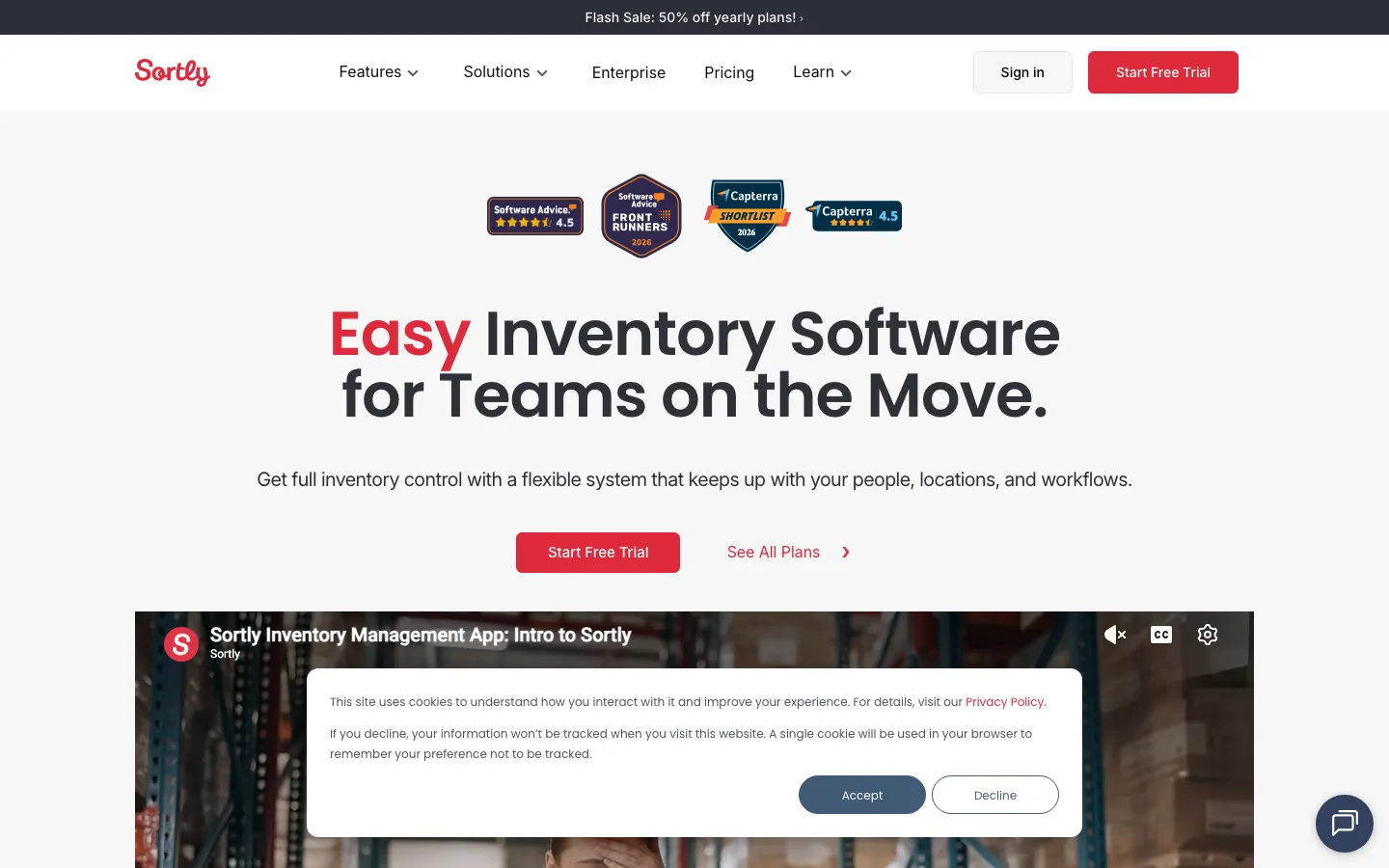
Stock and asset trackers. Sortly is the clearest case: items, photos, locations, a phone camera as the scanner, free for one user and a small catalogue. Right for a workshop, a trades company tracking tools, a small studio. Wrong as soon as purchase orders and sales orders have to flow through it.
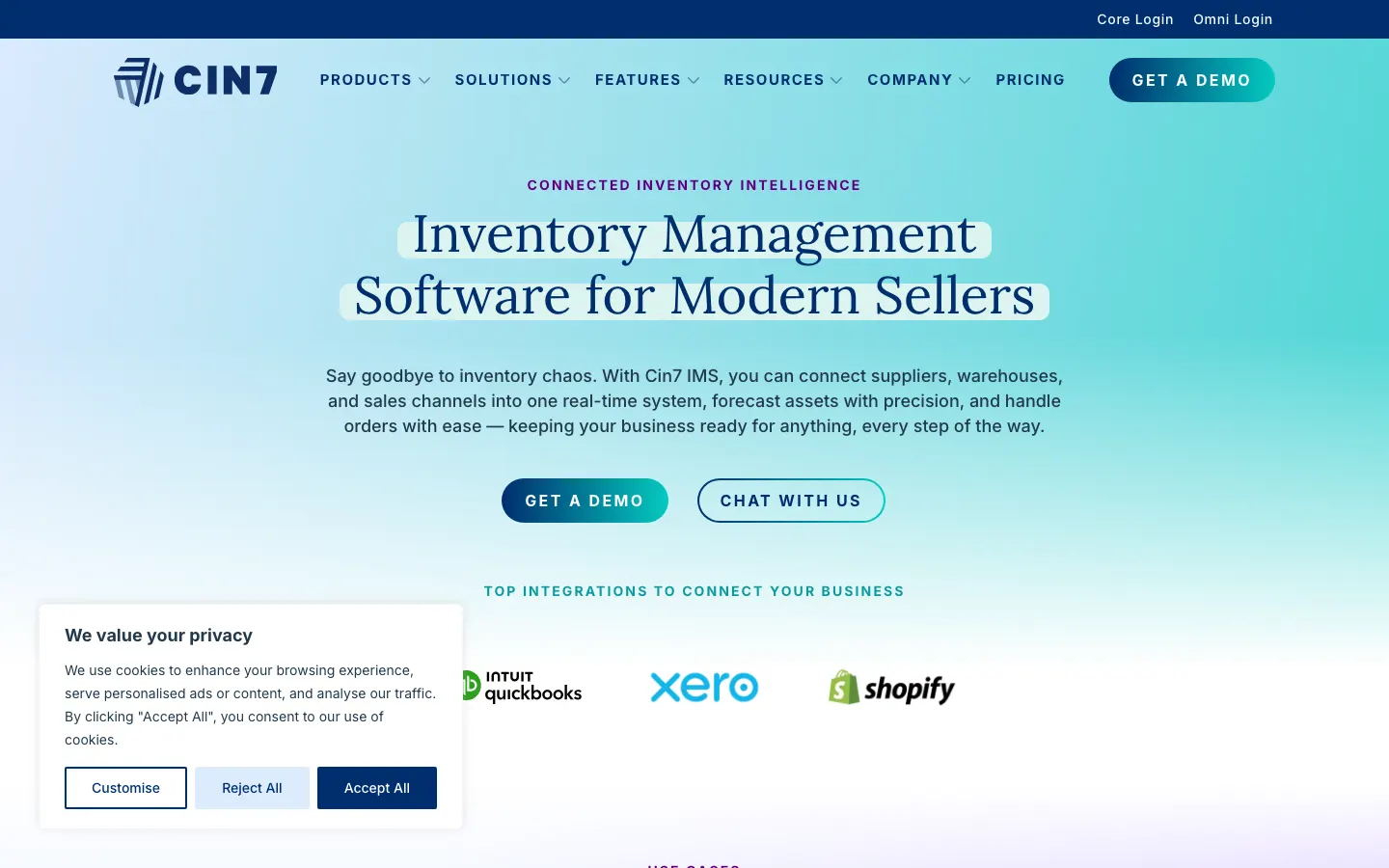
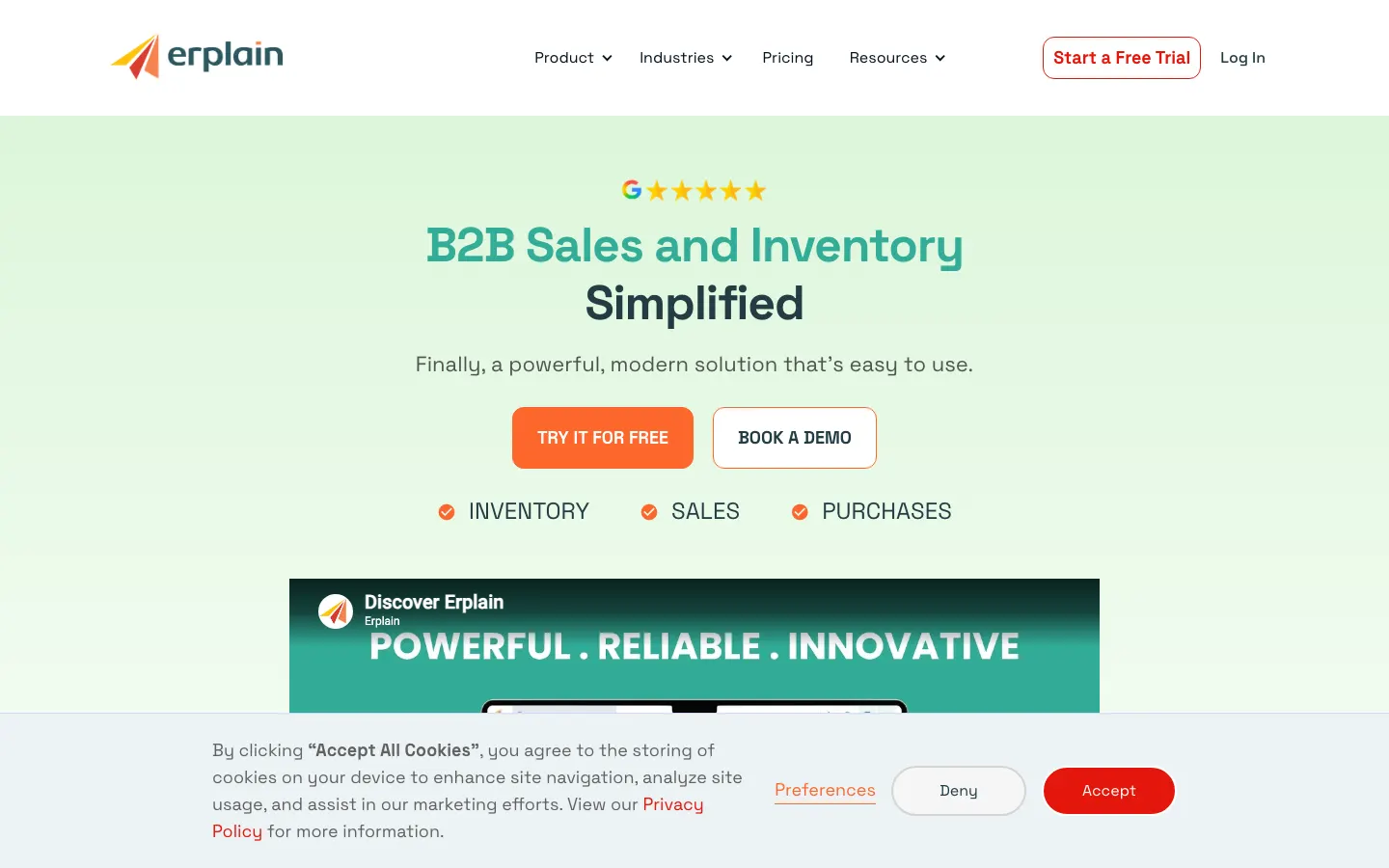
Order and stock systems for commerce. Zoho Inventory, Erplain, inFlow, Cin7. Purchase orders, sales orders, suppliers, customers, multichannel sales, often with B2B price lists. Right for wholesale, e-commerce and anyone whose stock moves because of orders rather than production. The thing to read is the volume cap, because these are priced per order band as much as per user.
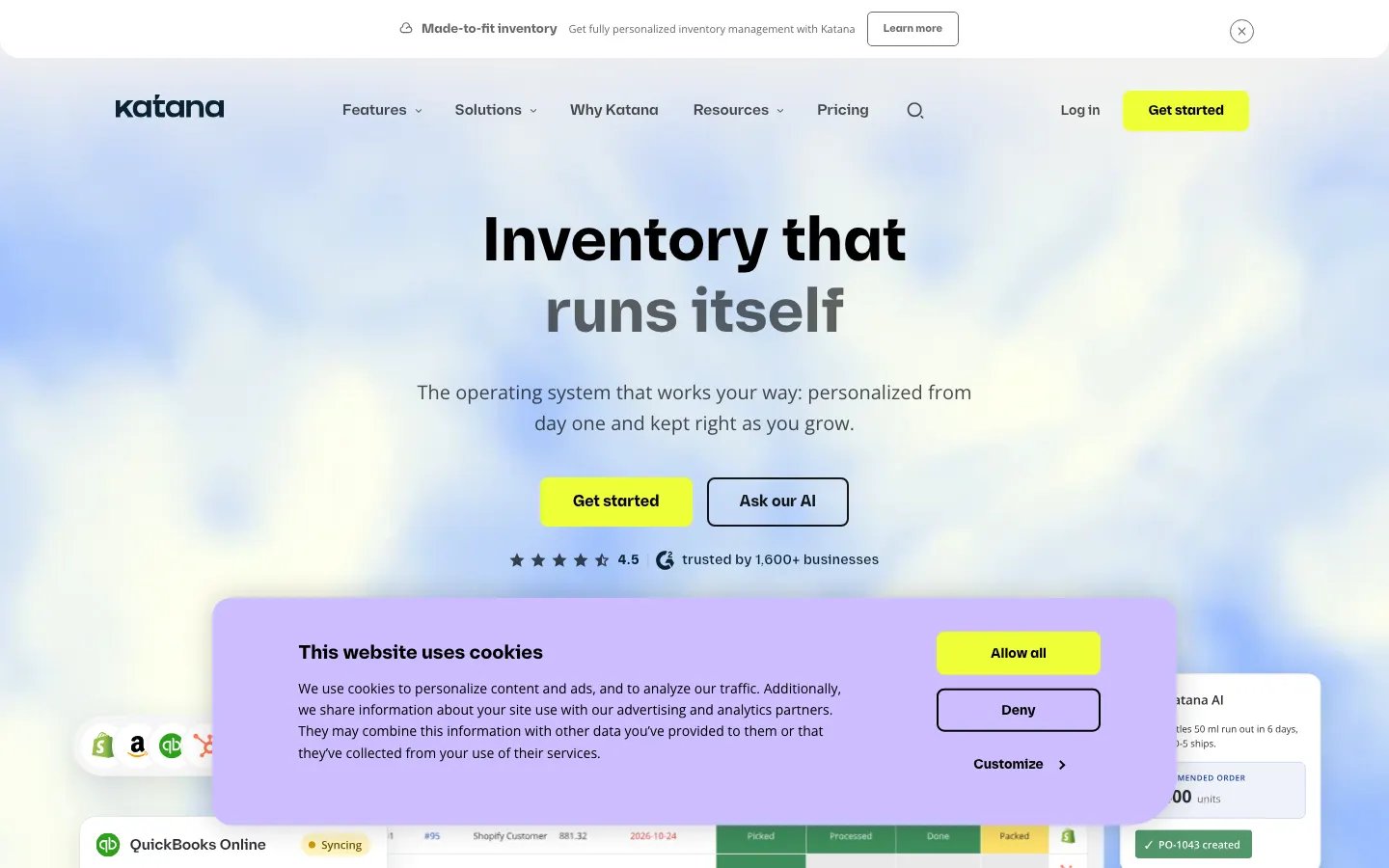
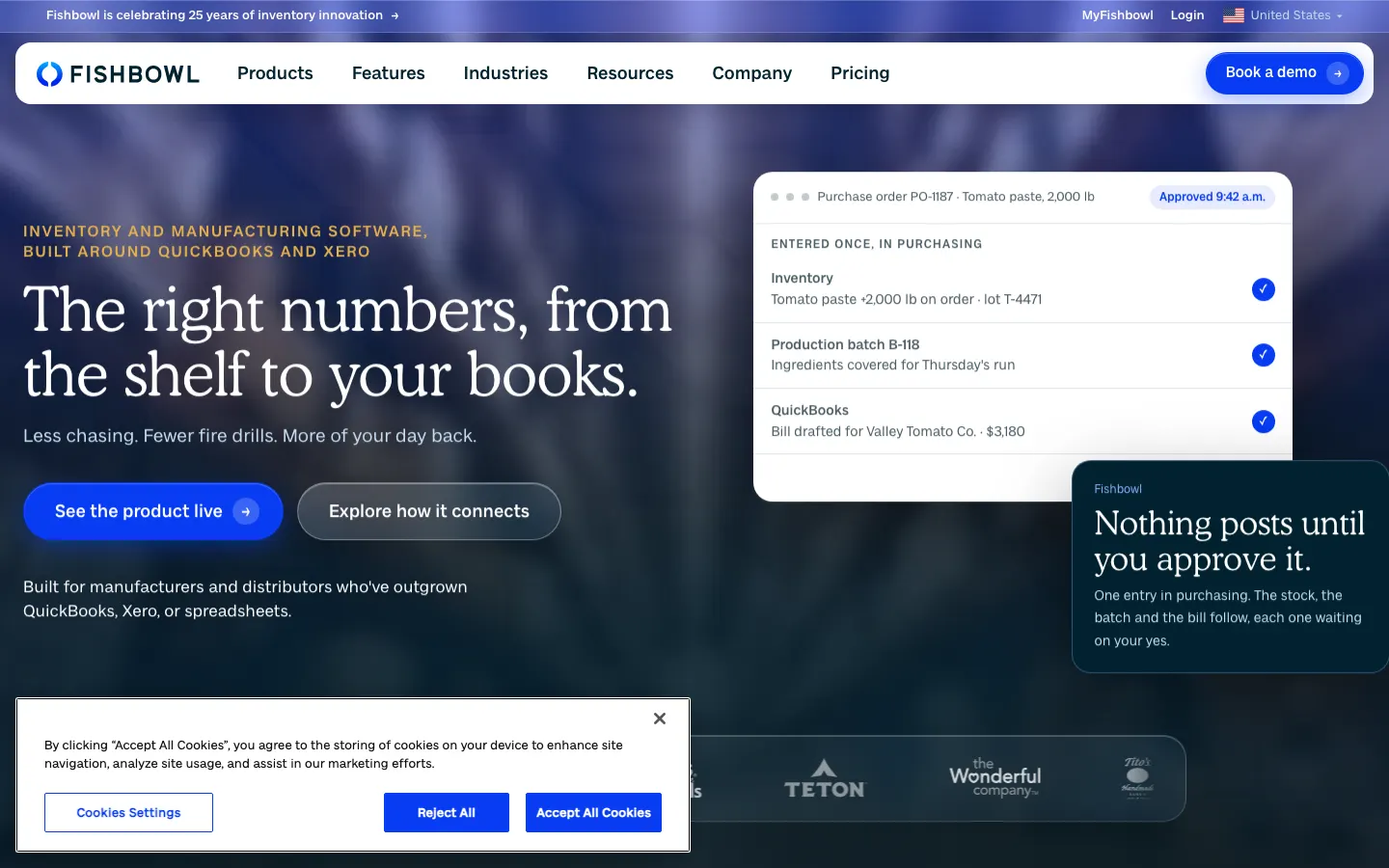
Manufacturing inventory. Katana, Fishbowl, Odoo with its manufacturing app. Bills of materials, work orders, components reserved against production. Right when you make the thing you sell, even in small batches. Wrong if you only buy and resell, where the extra concepts slow everyone down.
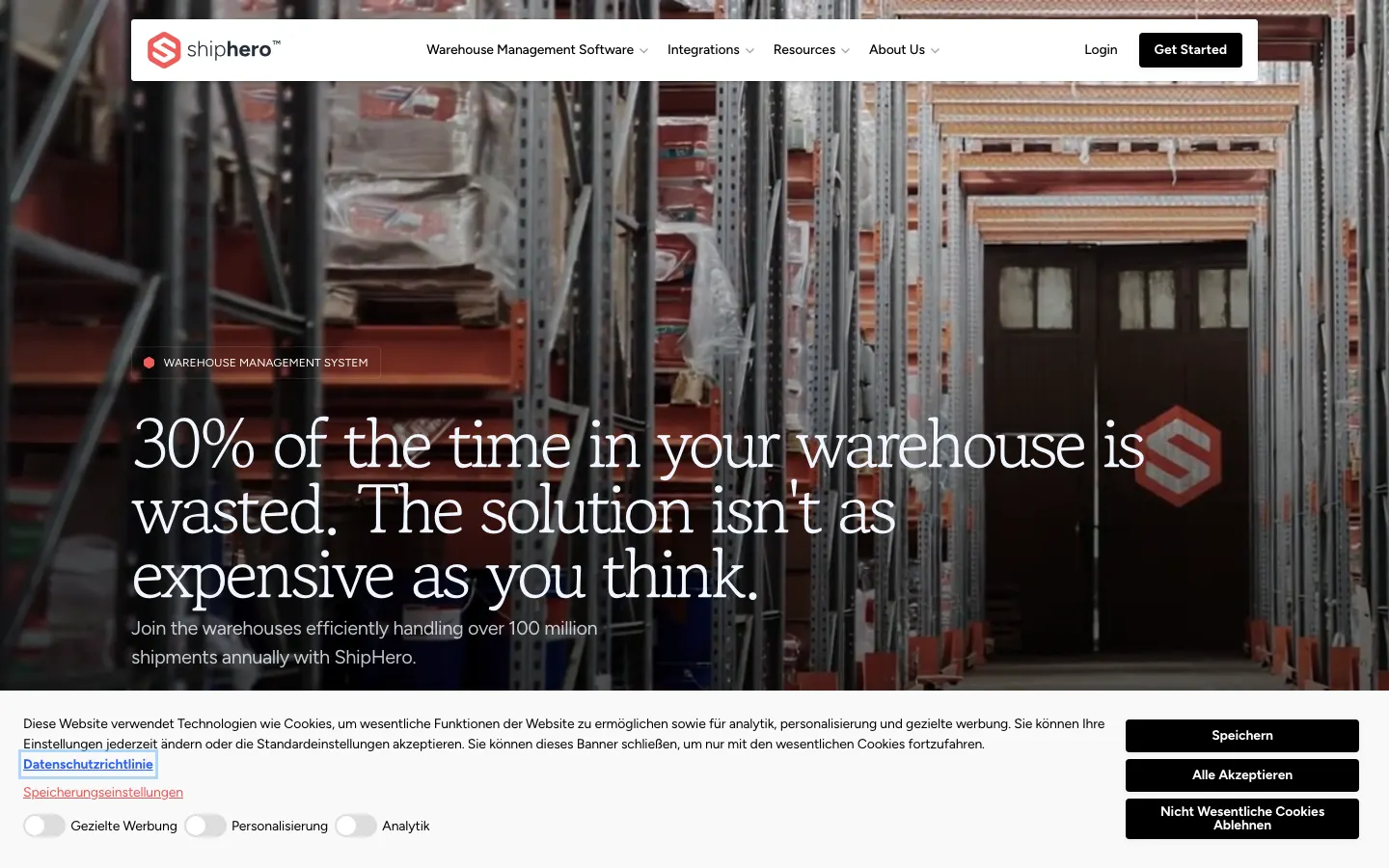
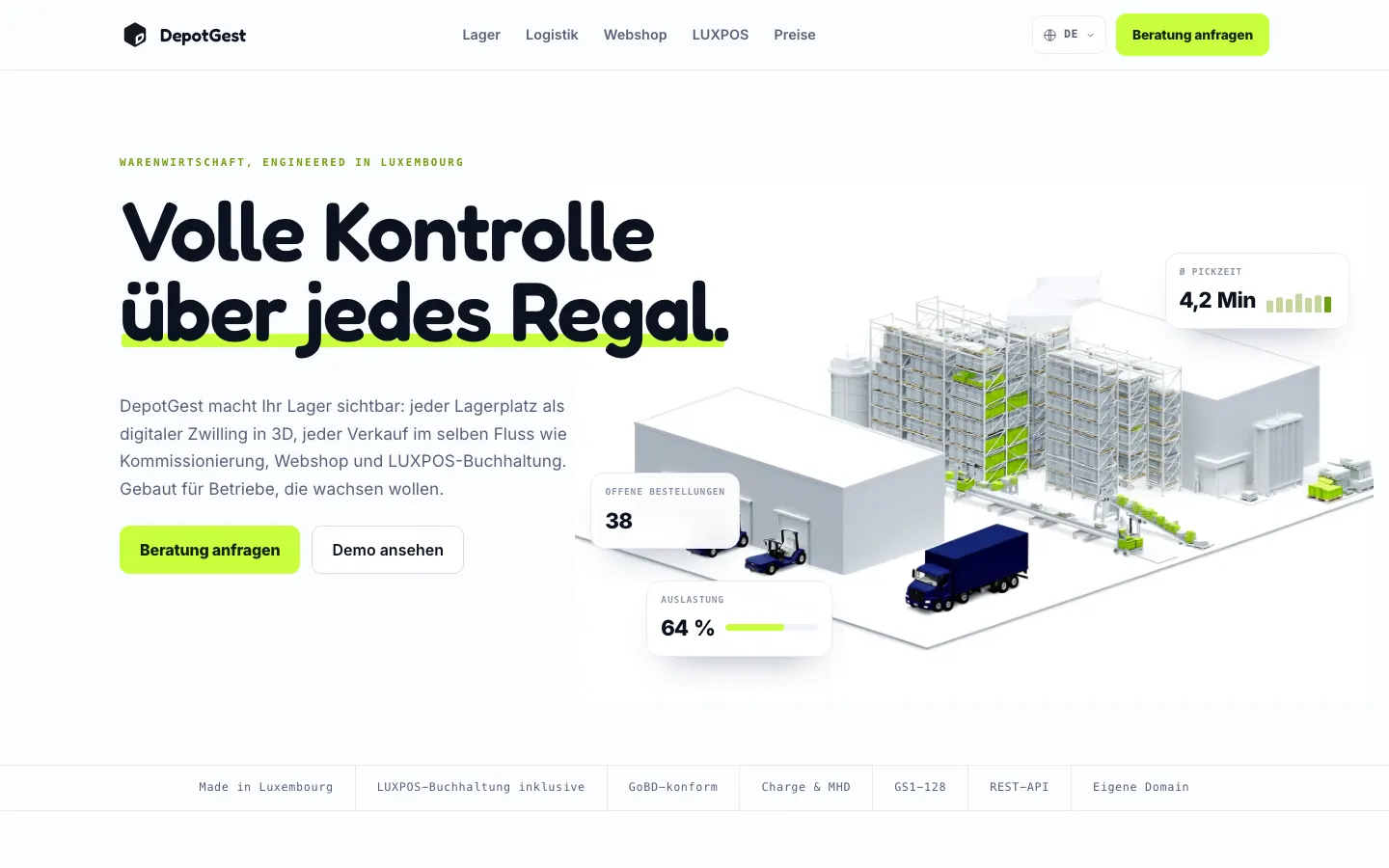
Real warehouse management systems. ShipHero, Mecalux Easy WMS, DepotGest, which is built by the company that publishes this site. Bins and locations, guided picking, waves, industrial scanners, packing and shipping. Right above a few thousand lines a day or a multi-aisle warehouse. Wrong, and expensive, for a stockroom behind a shop.
What actually matters when you choose
- What exactly do you need to track? Variants, serial numbers, lot numbers with expiry dates, bins, or just a quantity per SKU. Lots and expiry are the usual deal-breaker, because food, cosmetics and pharma need them and the cheap tools do not have them.
- Does the pricing unit match your shape? Per user, per organisation, or per order volume. Zoho Inventory's Standard plan covers 500 orders a month with two users, Erplain's entry plan covers one user and 1 000 orders, inFlow counts users and locations.
- Where does the stock number meet the ledger? Ask which valuation methods the product supports and whether your accountant accepts the output.
- Can it actually issue a compliant invoice? In Europe this now means a structured electronic invoice, not a PDF. Ask specifically whether the product emits Peppol BIS Billing 3.0 in UBL and transmits through an access point, or whether it only produces a file you upload by hand. Many vendors describe the second as the first.
- Scanning in the real world. A phone camera is fine for a stockroom and useless in a cold store with gloves. Ask which hardware is supported, and what happens on a device that loses Wi-Fi mid-count.
- Multi-location and transfers. Check that transfers are first-class objects with their own documents, not a pair of manual adjustments.
- Export and exit. A documented API and a full CSV export of items, stock and movements, demonstrated before you migrate anything in.
What does inventory software cost in 2026?
Published prices, net, cheapest paid plan, USD converted at 1 USD = 0,92 EUR, read on 11 November 2026.
| Product | Published entry price |
|---|---|
| Sortly, Zoho Inventory, Odoo, Katana | free tiers, with user, item or order limits |
| Odoo Standard, all apps | 19,90 EUR per user / month, annual billing |
| Zoho Inventory Standard | 29 USD per organisation / month, 500 orders, 2 users |
| Sortly paid | 49 USD per month, 2 users, 500 items |
| Erplain | 59 EUR per month, annual commitment, 1 user, 1 000 orders |
| inFlow | 948 EUR per year, about 79 EUR per month, 2 users |
| Fishbowl | 229 USD per month billed annually, 2 users |
| DepotGest | 249 EUR per company / month, 2 warehouses, 10 users |
| Cin7 | 349 USD per month, 5 users |
| ShipHero | from 15 000 USD per year, about 1 150 EUR per month |
| Mecalux Easy WMS, Katana paid tier | price on request |
The range is wide because the products are not comparable: free to about 60 EUR a month buys stock control for one or two people, 200 to 350 EUR a month buys a real multichannel order system, and a genuine high-volume WMS starts in four figures a month. Watch the order caps rather than the headline: a 29 USD plan with a 500 order ceiling becomes a different product at 1 500 orders.
The mistakes buyers make
Buying a warehouse management system to solve a bookkeeping problem, or an accounting module to solve a picking problem. Ignoring the order or item cap until the month it bites. Accepting an e-invoicing claim without asking whether the product transmits through a Peppol access point or just writes a file. Skipping a test stocktake, which is the only way to find out whether corrections leave an audit trail. And running stock valuation in the warehouse system on a different method from the one in the accounts, which guarantees an argument with the fiduciaire every year.
Europe and Luxembourg specifics
- Electronic invoicing to the state is already compulsory. In Luxembourg every economic operator invoicing the State, a municipality or a public establishment has had to send a structured electronic invoice since 18 March 2023, regardless of amount. The accepted formats are Peppol BIS Billing 3.0 in UBL and XRechnung 3.0.1, the older XRechnung 2.2.0 and 2.3.1 were accepted only until 1 October 2026, and the only legal channels are the Peppol network or the forms on MyGuichet.lu.
- Business to business is next, as a bill. Bill 8815, tabled on 30 July 2026, proposes receiving capability for all enterprises from 1 January 2028, issuing for large and medium enterprises from 1 July 2028 and for everyone from 1 January 2029, with the EU ViDA directive adding 1 July 2030 for cross-border transactions. Planning assumptions until it is voted.
- The audit file. A Luxembourg company keeping computerised accounts under the standardised chart of accounts can be asked for a FAIA 2.01 file during a VAT inspection. If invoicing happens in your stock system and bookkeeping elsewhere, the administration still expects one file, so check how the two products hand over.
- Cross-border stock. Moving goods between EU warehouses creates VAT and Intrastat obligations, and distance selling into other member states pulls in the One Stop Shop. Ask whether the product reports per country of destination, not just per warehouse.
- Language and units. A Luxembourg warehouse team is multilingual and a scanner interface in English only is a training cost. Ask which languages the operator screens are translated into, separately from the back office.
Questions to ask an inventory vendor
- Can you show lot numbers with expiry dates and serial tracking in a demo account?
- What is my bill at my order volume and my user count, with the caps named?
- Does the product emit Peppol BIS Billing 3.0 in UBL and transmit through an access point?
- Which stock valuation methods are supported, and what does the accounting export look like?
- Can you run a stocktake with a correction and show me the audit trail it leaves?
Where to go next
The ranking against these criteria is in the best inventory management software, and the warehouse end is separate in the best WMS for small warehouses in Europe. If you are not sure which of the two you are buying, start with the difference between an ERP and a WMS. The invoicing obligation is worked through in the Luxembourg e-invoicing obligation. Two head to heads apply the criteria: Odoo Inventory against Katana and DepotGest against Zoho Inventory. Prices and sources sit on the Odoo Inventory and Zoho Inventory profiles. Vendors can correct us through get listed.
Disclosure: Thinking is published by TTA Technologies, which also builds DepotGest. Prices above come from vendor pages read on 11 November 2026.
Questions and answers
What does inventory management software do?
What is the difference between inventory software and a WMS?
How much does inventory software cost per month?
Which inventory software handles lot numbers and expiry dates?
Does my inventory software need to send Peppol e-invoices?
Can I run a warehouse on spreadsheets?
Is Odoo Inventory good enough as a WMS?
How do I avoid outgrowing my inventory plan?
What should I check before migrating stock data?
Weekly, Thursday morning, Central European Time.
The Thinking briefing
One email a week: what changed in European business software, which prices moved, and which comparison we published. No sales mail.